
Mould and damp in Madeira: why it keeps coming back, and what actually helps
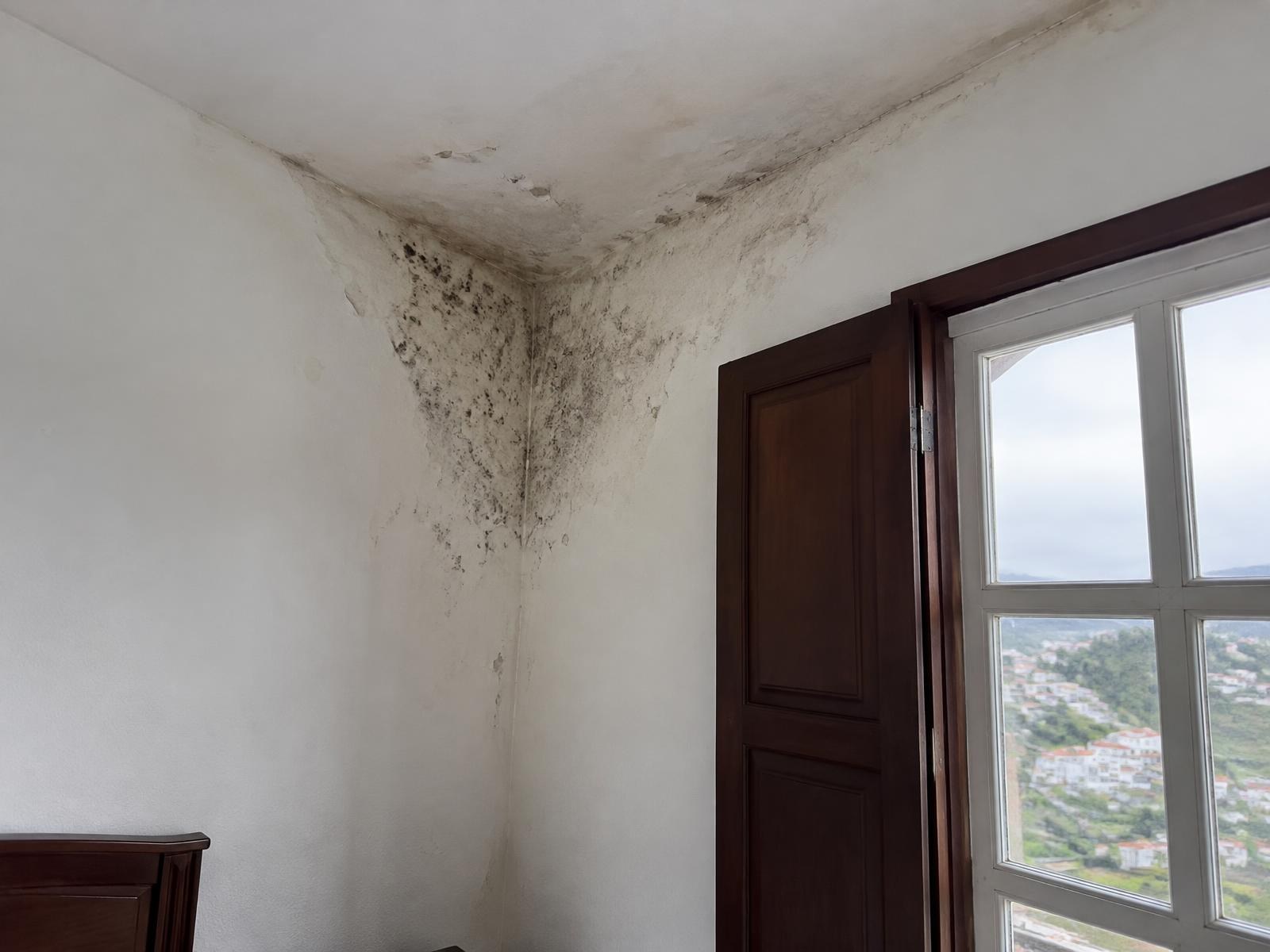
Black spots in a bedroom corner, a musty smell in the wardrobe, paint bubbling under the window. In Madeira these problems usually appear between October and February – and if only the stain is treated, they come back every winter. The fix depends on where the water is coming from, so that is the first thing to find out.
Why Madeira homes get damp in winter
- Most of the rain falls between October and February. In Funchal, December averages 95 mm, October 91 mm and November 80 mm, compared with 27 mm in May and almost nothing in July and August.
- The north coast and higher ground are much wetter and colder. In January 2026, about 170 mm of rain fell in Santana, against roughly 85–95 mm in Funchal. Nights averaged 9.9 °C in Santana, while in Funchal the January night-time average is around 14 °C.
- The air is humid all year. Morning humidity in Funchal is around 70–75 %.
- Most homes have no heating. Outside walls, especially north-facing ones and walls built against the hillside, stay cool for months.
Rain in Funchal, month by month
Average monthly rainfall 1991–2020. October to February brings about 70% of the year's rain.
| Month | mm |
|---|---|
| Jul | 1.7 |
| Aug | 1.3 |
| Sep | 23.1 |
| Oct | 91.2 |
| Nov | 80.3 |
| Dec | 94.8 |
| Jan | 67.1 |
| Feb | 72.4 |
| Mar | 62.3 |
| Apr | 45.2 |
| May | 27.2 |
| Jun | 7.8 |
The north coast and higher ground get much more rain than Funchal.
Source: IPMA, climate normals Funchal 1991–2020
Four causes that look the same on a wall
- 01
Condensation
- Corners of outside walls, behind furniture, around windows
- Worse in the morning and after showers or cooking
- 02
Rain getting in
- Appears or grows after heavy, wind-driven rain
- Under terraces and flat roofs, around windows
- 03
A leaking pipe
- Damp whatever the weather, near bathroom or kitchen
- Water meter moves with every tap closed
- 04
Ground moisture
- A band of damp low on ground-floor walls
- Crumbling plaster and white salts
1. Condensation – the most common cause in winter. Warm, moist indoor air meets a cooler wall. In a room at 20 °C and 70 % humidity, a wall surface at about 18 °C is already damp enough for mould to grow over time, and at about 14 °C water visibly condenses on it. Typical signs: corners of outside walls, behind wardrobes and beds, around window frames and on bathroom ceilings; worse in the morning and after showers, cooking or drying laundry indoors.
2. Rain getting in. The damp appears or grows after heavy, wind-driven rain: under terraces and flat roofs, around windows, or where a gutter overflows. Look for tide marks, bubbling paint and white salt deposits.
3. A leaking pipe. The patch stays damp whatever the weather, usually near a bathroom or kitchen or along a pipe route. A simple test: close every tap and check whether the water meter still moves.
4. Moisture from the ground. A band of damp low on the walls of ground-floor or semi-basement rooms, especially walls built against the slope, often with crumbling plaster and white salts.
Many homes have more than one of these at the same time, which is why a stain that was painted over comes back.
What you can do yourself
- Air the room briefly and often. Open the windows wide for 5–10 minutes rather than leaving them tilted all day, and do it on drier days. On rainy days the outside air is often as moist as the air inside.
- Get moisture out where it is made. Use the extractor fan in the bathroom and kitchen, keep lids on pans, and dry laundry outside or in a room with a dehumidifier.
- Leave a gap. Keep wardrobes, beds and sofas 5–10 cm away from outside walls so air can reach the wall.
- Use a dehumidifier in the worst room. Empty it daily and aim to keep indoor humidity below 60 %.
- Add a little warmth. An air conditioner with a heat-pump mode warms the room and dries the air at the same time. Even a few degrees warmer walls mean much less condensation.
- Clean small patches early. Use a mould cleaner, wear gloves, and do not simply paint over mould – it grows back through the paint.
- Prepare the outside before the heavy rain. Clear gutters and downpipes, and check terrace drains and the sealant around edges and windows.
When to call someone
- The damp gets worse after rain, or a patch never dries.
- The water meter moves with every tap closed.
- The mould covers more than about 1 m² – the US Environmental Protection Agency suggests getting help above roughly this size.
- The home stands empty in winter. Nobody airs it, so damp builds up unnoticed. On the south coast, our sister company Ilha Calma offers holiday home care with a photo report after every visit.
How we deal with damp
We look for the cause first, with moisture readings and thermal imaging, and check ventilation and the outside of the building. Then we repair what is causing the problem: pipes and connections, shower seals, grout and silicone, gutters and outside cracks. Where condensation is the issue, we improve ventilation, for example with a bathroom extractor fan, and treat and repaint the affected surfaces. If a hidden leak can only be found with specialist equipment, we tell you straight away and recommend a specialist.
You receive a short written summary with photos and a written quote before any work starts. We reply to every request within 48 hours.